
After months in braces, you want your teeth to be perfect when those braces come off. Sometimes, there are issues that braces alone can’t fix, such as broken, chipped, or cracked teeth — or even the tooth size itself. In the case of gaps due to tooth size, dental bonding after braces can be a great solution to give you that perfect smile.

Composite bonding teeth (also known as dental bonding or cosmetic bonding) can be a great way to repair a gap in your teeth after braces or Invisalign without getting veneers or crowns. Instead of those more expensive, invasive procedures, the tooth can be coated with a composite resin that is molded and shaped to give your tooth a fuller, more natural look.
Your dentist will match the bonding material color to your natural tooth color so it blends in perfectly with your natural teeth. Teeth composite bonding is pain-free. But don't be surprised if your teeth feel a little strange after bonding! With bonding, your tooth might feel wider or oddly shaped with the addition of bonding material. Just like you got used to your braces or Invisalign, over time, the resin added to your teeth will become less noticeable.
Dental bonding in orthodontics is sometimes recommended for patients with small lateral incisors. These are the teeth between your canines and two front teeth. When a patient with small lateral incisors finishes orthodontic treatment, and their teeth are right where they should be, there can be a small space to the left and right of the front teeth.
In cases like these, we sometimes suggest seeing a cosmetic dentist for teeth bonding after braces to reshape the teeth to be wider and larger. Bonding can close the gap in teeth after braces for patients whose lateral incisors may be smaller than average in size.
Dental bonding has a lot of benefits when compared to other possible solutions, like crowns and veneers.
Compared to veneers or crowns, the primary disadvantage of dental bonding is that it is not a permanent solution. It’s important to remember that the bonding material on your tooth is not stain-resistant and does not respond to teeth whitening treatments. Remember to practice great oral hygiene to keep your teeth healthy and strong!
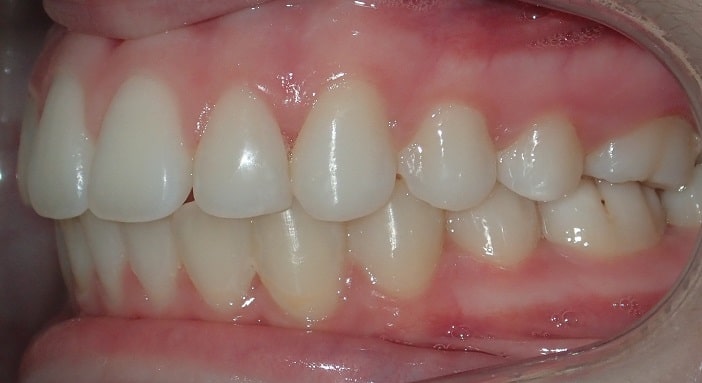
Here are some of our patients who followed their orthodontic treatment with dental bonding!
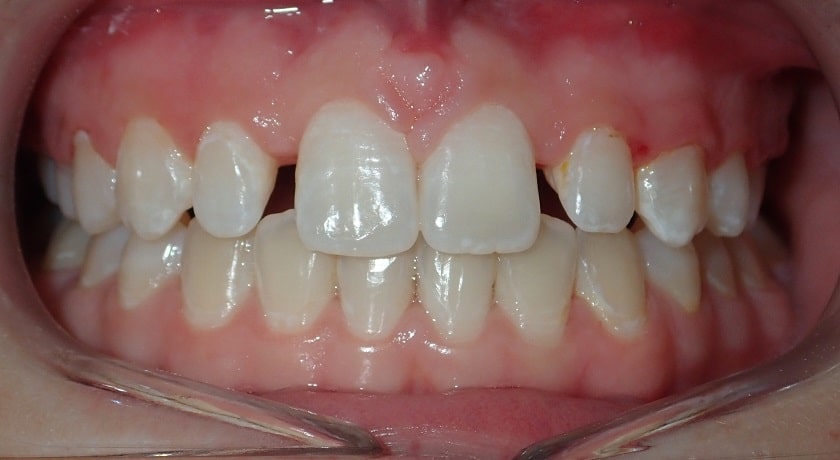
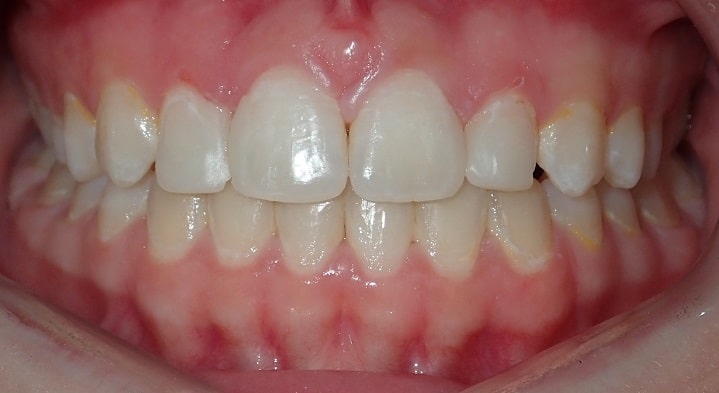
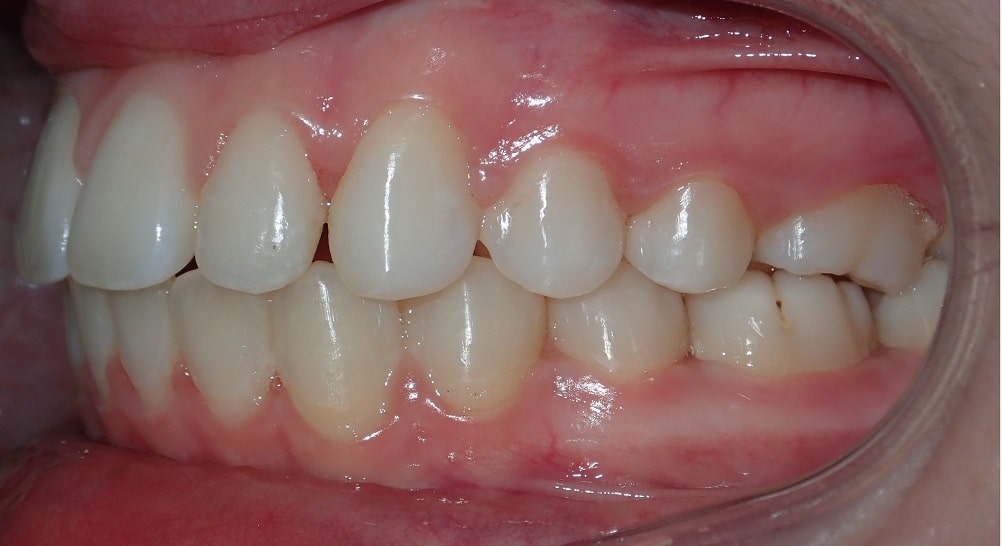
How long does dental bonding last after braces?
Dental bonding typically lasts between 5 and 10 years depending on where it's placed and how well it's maintained. Bonding on teeth that experience heavy biting pressure may wear faster. Good oral hygiene and avoiding habits like nail biting or chewing on hard objects will help it last longer.
Does dental bonding stain over time?
It can, yes. Unlike natural tooth enamel, composite resin is not stain-resistant. Coffee, tea, red wine, and highly pigmented foods can gradually discolor the bonding material. It's also worth knowing that bonding won't respond to teeth whitening treatments, so if you plan to whiten, it's best to do that before the bonding is placed so the color can be matched to your whitened teeth.
Is dental bonding covered by insurance?
Dental bonding for cosmetic reasons, such as closing small gaps after braces, is typically not covered by dental insurance. However, if it's being used to repair a chipped or broken tooth, partial coverage may apply. Your dentist can help clarify what your plan covers before you proceed.
Is bonding a better option than veneers after braces?
For small gaps resulting from naturally narrow lateral incisors, bonding is usually the more conservative and cost-effective option. It requires less removal of natural tooth structure than veneers and can often be completed in a single visit. Veneers may be a better fit for patients who want to address multiple cosmetic concerns at once, but for targeted gap closure after braces, bonding is often all that's needed.
Who does the dental bonding — the orthodontist or the dentist?
Dental bonding is a cosmetic dentistry procedure, so it's performed by your dentist, not your orthodontist. At Zombek Orthodontics, if we think bonding would complete your smile after treatment, we'll let you know and coordinate with your dentist so the timing and outcome work together seamlessly.
Braces and Invisalign can do a lot, but for some patients, finishing the smile means working with a cosmetic dentist for dental bonding after braces. If Dr. Zombek thinks bonding might be right for you, we'll let you know at the end of your treatment and help point you in the right direction. If you're ready to get started or want to find out what your treatment plan might look like, schedule an appointment</a> with us in Weston or Hollywood, FL.

 This site’s strategy, design, photo & video were created by the marginally-above-average folks @ Clear Partnering Group.