
Patients getting braces expect their teeth to be sore the first few days. What they may not expect is tooth sensitivity — that dull, achy feeling that comes with or without chewing. It's one of the most common things we hear about, and there's a real explanation for it.
It comes down to what's actually happening inside the bone when teeth move.
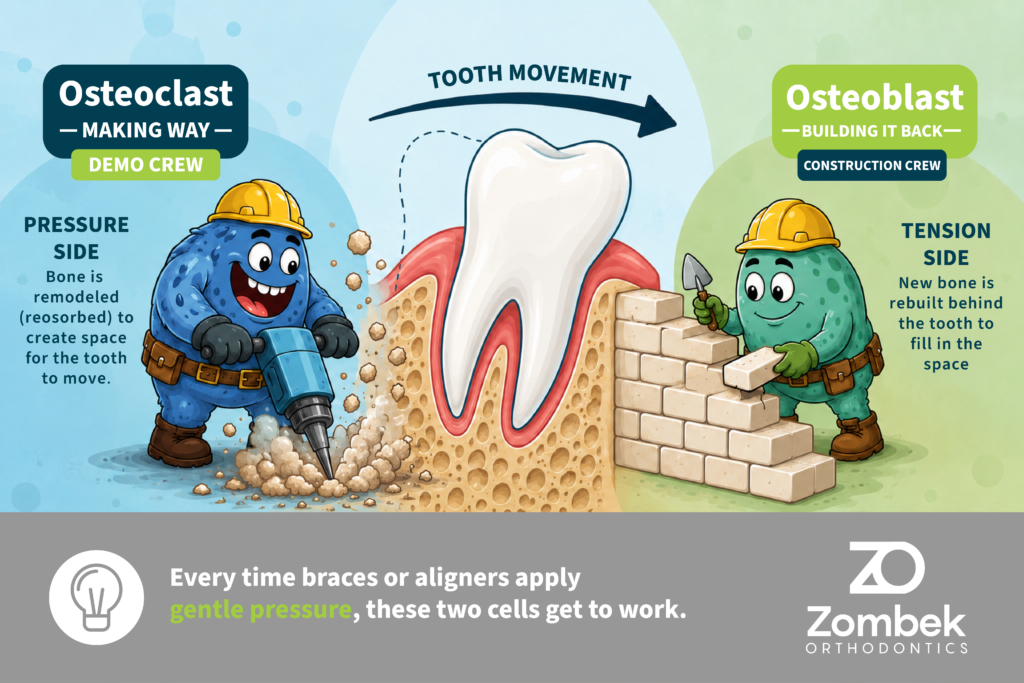
When braces apply gentle, steady pressure to a tooth, two types of specialized cells inside the surrounding bone get to work. On the pressure side — the direction the tooth is moving toward — cells called osteoclasts resorb, or break down, the bone to create space for the root to move into. On the tension side — behind the tooth — cells called osteoblasts rebuild new bone to fill in the space left behind.
This constant process of bone breakdown and rebuilding is what makes your teeth feel sensitive. The tooth becomes slightly mobile, similar to the feeling of a loose baby tooth. That's the sensitivity you're experiencing — not damage to the tooth itself, and not the same as sensitivity caused by thinning enamel or a cavity.
No. The first 3–5 days after braces are placed tend to be the most uncomfortable — that's when everything is adjusting to the new pressure. After that, things settle down considerably.
Some sensitivity may come back after each adjustment appointment. What happens at those visits matters — if we're changing wires, you might feel it for just a day or two. If we're repositioning several brackets at once, it can take a few days longer for things to stabilize. Between appointments, most patients feel little to no discomfort.
One thing to know: if you're experiencing sensitivity to sweetness — not pressure or temperature, but sweet foods specifically — that's a different kind of sensitivity and can signal a cavity. Let us know if that's what you're feeling, because that's not related to braces.
Invisalign works the same way braces do — by applying controlled pressure to move teeth through bone — so the same biology applies. Osteoclasts and osteoblasts are doing the same work whether you're in brackets or clear trays.
With Invisalign, sensitivity tends to be most noticeable at the start of treatment and when you switch to a new set of trays every 1 to 2 weeks. Tray changes typically cause sensitivity for only a day or two, since the forces are more incremental than the initial placement. Between tray changes, most patients are comfortable.
Chewing puts pressure on teeth that are already under pressure from the braces, so the biggest thing you can do in those first few days is stick to soft foods that require little to no chewing. Think soup, applesauce, mashed potatoes, yogurt, soft pasta, and protein shakes.
After a couple of days, as the sensitivity starts to ease, you can move toward foods that are easy to chew — soft fruits, well-cooked vegetables, eggs. Within about a week, most patients are back to eating normally. Just continue to avoid hard, crunchy, or chewy foods throughout treatment — they increase sensitivity and can damage the braces.
Rinsing with warm salt water two to three times a day is also helpful for soothing sore gums and reducing any inflammation.
Over-the-counter pain relievers like ibuprofen or acetaminophen can help manage discomfort in those first few days — just follow the package directions.
One advantage of Invisalign is that you remove the trays to eat, so there's no added pressure from chewing while they're in. Still, stick to softer foods for the first few days after getting new trays, while sensitivity is at its peak.
Make sure to brush your teeth before putting your trays back in, or at minimum rinse your mouth well. You don't want to trap food or bacteria against your teeth under the aligner.

Sensitivity doesn't always end the day the braces come off. For the first several months after treatment, the bone is still hardening, and the teeth can still move. During this time, patients may notice sensitivity that feels more like pressure when chewing or biting rather than the cold or temperature sensitivity most people associate with sensitive teeth.
This is exactly why retainers matter so much in those first months. We ask patients to wear them 22 hours a day initially — removing them only to eat and brush — to keep the teeth stable while the bone fully sets. It generally takes around six months for that process to complete. As it does, the sensitivity resolves. We'll adjust your retainer schedule over time, typically moving to nighttime wear once everything has stabilized.
Most sensitivity during braces treatment is normal. That said, some things are worth a call:
Don't hesitate to reach out. We'd always rather you call and find out everything is fine than wait on something that needs attention.
The worst sensitivity is typically in the first 3–5 days after braces are placed. After that, it fades significantly. Some sensitivity returns after adjustment appointments, usually lasting one to a few days depending on what was adjusted. Between appointments, most patients feel comfortable.
Yes, for the same reason braces do — both work by applying pressure to move teeth through bone. With Invisalign, sensitivity tends to be most noticeable at the start of treatment and when switching to a new tray. Most patients find tray-change sensitivity lasts only a day or two.
Yes. In the months after braces are removed, the bone around the tooth roots is still hardening and stabilizing. During this time, you may notice some pressure sensitivity when chewing. Wearing your retainer as directed is the most important thing you can do to minimize this and protect your results.
Braces sensitivity comes from the tooth moving through bone — it typically feels like pressure or a dull ache. Sensitivity to sweet foods or drinks is a different signal and is more commonly associated with tooth decay. If you're noticing sensitivity to sweetness, give us a call so we can take a look.
Sensitivity with braces is temporary, and it's a sign that treatment is working. If you have questions or you're ready to get started, schedule an appointment with us in Weston or Hollywood, FL — we'd love to meet you.

 This site’s strategy, design, photo & video were created by the marginally-above-average folks @ Clear Partnering Group.