
Why does braces treatment take so much time? It comes down to biology. Kids' jaws, teeth, and facial structure are all still developing, and we have to work with that growth rather than rush past it. Teeth, jaws, and bite relationships shift over time, and guiding that process carefully helps keep your child's dental issues from creeping back once their jaws finish growing.
At Zombek Orthodontics, we want to build a healthy, beautiful smile that actually lasts, which is why we often plan treatment in phases rather than one quick fix. Understanding why braces treatment takes time and what actually happens at each stage makes the whole process a lot less confusing.
Most kids don't walk out with braces on day one. First, we build a plan tailored to their mouth and their specific dental issues, and the more complex those issues are, the more thought that plan takes.
That first visit usually includes a full exam, some photos, and often digital scans or X-rays, so we can actually see what's going on with the teeth, jaw, and bite before recommending anything.
Dental issues tend to get worse over time if left alone, which is one reason the American Association of Orthodontists recommends kids see an orthodontist by age 7, even if braces are still years away.
For some kids, we'll recommend a two-phase orthodontic plan because it sets up better long-term results by guiding how the mouth develops, rather than just straightening what's already there.
Say your child has crowded teeth because their jaw is narrow. Phase One might mean a palate expander to widen it. If thumb sucking or tongue thrusting is part of the picture, we might use a tongue crib instead, to stop a habit before it does more damage. A significant overbite or crossbite is another common reason for early treatment, since correcting it while the jaw is still growing is usually far simpler than waiting until growth has finished.
Phase One often starts somewhere between ages 7 and 10, while the jaw is still developing and baby teeth are still on their way out. Phase Two, the part most people picture when they hear "braces," usually comes later, once permanent teeth are in, typically between 11 and 13.
Not every kid needs both phases. Sometimes Phase One is enough on its own to head off bigger problems down the road, like a narrow palate that would otherwise crowd the adult teeth. Other times, a child's dental issues are minor enough that waiting and going straight to braces later works just as well.
We won't know which path is right until we've actually examined your child's mouth. Once we have, we can tell you what treatment will involve, roughly how long it'll take, and what kind of results to expect. It's never a one-size-fits-all answer, which is part of why the planning stage matters so much.

Starting too early, while the jaw still has a lot of growing to do, can sometimes let normal growth push teeth and bite out of alignment again, meaning more treatment down the line.
Starting too late has its own downside. Teeth that don't align properly wear unevenly during chewing, and waiting only gives those issues more time to compound, which can mean more discomfort, more damage, and a longer road to fixing it all.
That's why we recommend age 7: it's early enough to catch problems while there's still room to guide things, without jumping the gun on treatment your child doesn't need yet.
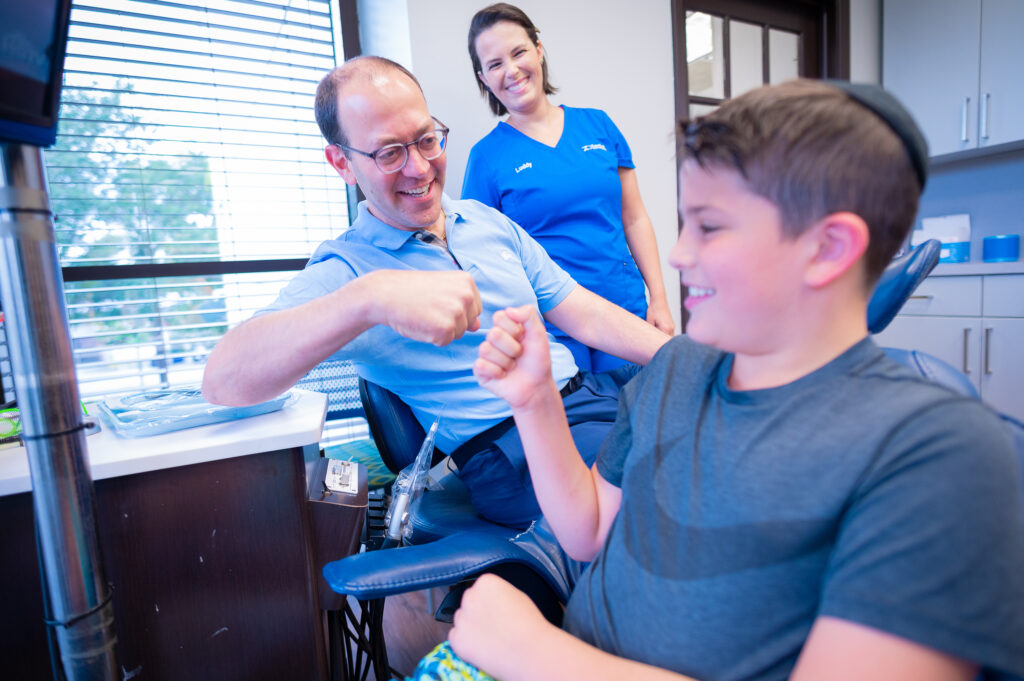


Their jaw may still be growing, and putting braces on too soon can throw off how the teeth, bite, and jaw settle into place. We typically wait until most of the permanent teeth are in, and sometimes we'll do some pre-treatment first, like stopping thumb sucking or tongue thrusting. As we often tell parents, consistency matters more than speed here.
We'll monitor jaw development and permanent tooth eruption, usually with checkups every six months or so. If your child is wearing an appliance like a palate expander or tongue crib, we may want to see them more often just to make sure it's doing its job.
Not necessarily. Our goal is always the best result in the shortest reasonable time, not the fastest possible timeline. Rushing treatment can actually do more harm than good to your child's teeth and jaw.
We rely on X-rays to see how the jaw is developing and where permanent teeth are still waiting to come in, along with the tooth roots, which aren't visible any other way. Panoramic X-rays are considered safe for children. Research on digital panoramic units puts the dose at roughly a tenth to a third of a typical chest X-ray, a small fraction of the background radiation we're all exposed to over the course of a normal year.
Zombek Orthodontics takes a methodical, comfortable approach to kids' orthodontics, because we know how much a confident smile matters to a child or teenager. We love seeing the confidence boost our patients get

Can I get braces with crowns? What about Invisalign with dental implants? Can I get orthodontic treatment with veneers? Will my previous dental work keep me from orthodontic treatment?
Many adults think they can’t get braces treatment or clear aligners treatment because they have crowns, bridges, dental implants, or fillings. That’s not the case at all! We can certainly work around your previous dental work to give you the smile you want.
Zombek Orthodontics will work with your dentist to provide the customized treatment you need and accommodate your previous dental work.
Yes, you can get braces with a crown. We will use a special bonding agent so it doesn’t damage your crown. We can move what’s left of the tooth under the crown.
Absolutely! We can move your teeth with or without fillings. We’ll work carefully to avoid damaging the tooth, depending on how much of the original tooth is left after it’s drilled for the filling.
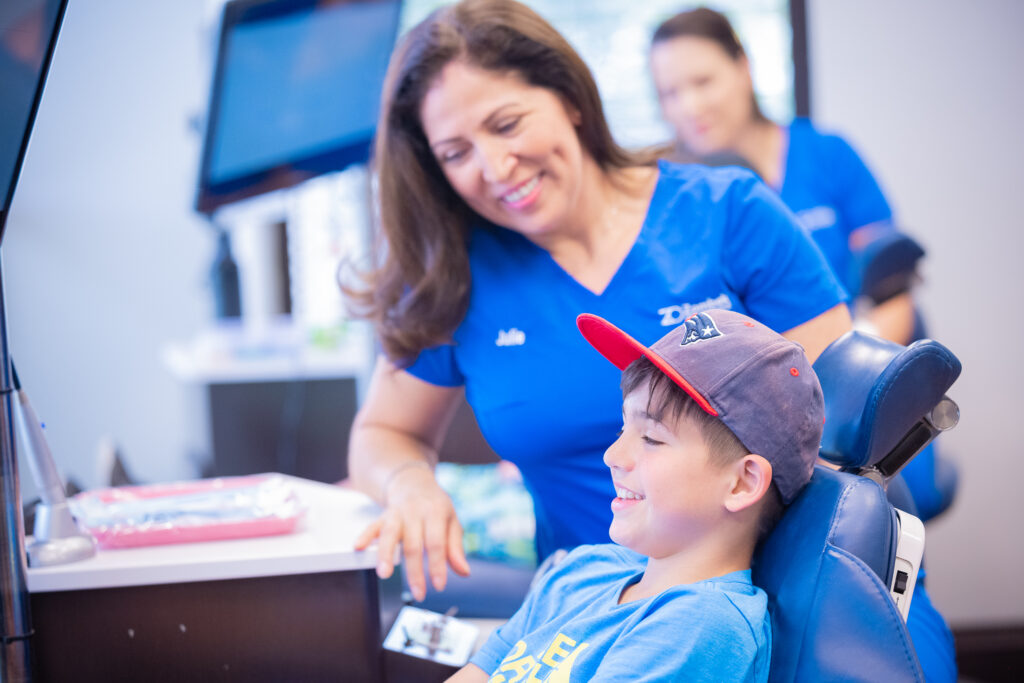
Yes, though they can be a bit tricky. Dental implants are metal “roots” implanted in your jawbone that lack a periodontal ligament, which is what moves your teeth. They can’t be moved during your treatment, so we’ll have to work around them. But it shouldn’t be a problem.
The good news is, we can treat your dental issues with braces despite your dental implants. We can fix your overbite, underbite, or crossbite. We can close your gaps and relieve your crowded teeth. We don’t attach a bracket to the crown of a dental implant. Instead, we skip that tooth.
Your dental implants may not be in perfect line with the rest of your teeth after braces. There are ways to improve this, including placing a new crown that lines up better with your other teeth.
You can, but as with crowns, we may use a special bonding agent on your veneers and we may attach the brackets in a special way. Many people get veneers to close gaps between their teeth. Your orthodontic treatment may close those gaps without needing veneers or dental bonding.
You can also wear Invisalign with veneers. We can customize your clear aligners to fit around your veneers.
If you’re considering getting veneers, it might be a good idea to get them after your orthodontic treatment.
In fact, if you’re planning to get any dental work such as crowns, bridges, dental implants, or veneers, we recommend you get your orthodontic treatment first. Dr. Zombek will work with your dentist to coordinate your dental work with your orthodontic treatment.

Absolutely! You can definitely get Invisalign with fillings.
Yes, you can, although we will skip your crown when placing your braces. But we can move the tooth underneath, so that shouldn’t be a problem. We can also treat you with a bridge. We will just have to be careful not to close the gap where your crown goes, but that won’t be a problem.
Yes, although we won’t be moving your dental implant. It’s fused to your jawbone and won’t move. We will work around it.
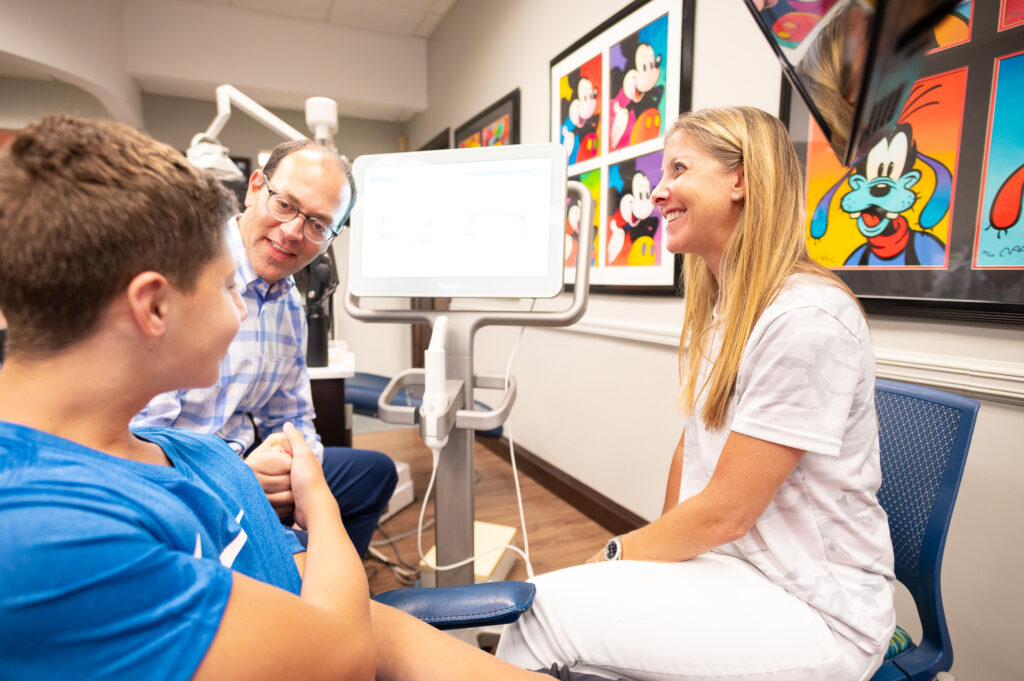
Zombek Orthodontics will work with your regular dentist to provide you with the best orthodontic treatment as possible around your previous dental work. If you’re an adult who’s interested in braces treatment or Invisalign treatment in Weston, FL, or Hollywood, FL, schedule an appointment with Zombek Orthodontics.
You've made it through your first year in braces. At first, you could see the changes being made. Your canines are no longer above your other teeth. Your bottom teeth are no longer sideways. But after a year in braces, it seems as if things have slowed down.
Can you speed up your braces treatment? Is anything still happening, even though it doesn't seem like it?
Your orthodontist will tell you that consistency is more important than speed. That's because braces treatment is a precise science. Each tooth must be moved a certain way at a certain time so they all fall into place.
Applying too much pressure and moving your teeth too quickly can damage your teeth and jaws. That's why slow, gentle pressure is the key to orthodontic treatment, whether it's with braces or Invisalign.
Zombek Orthodontics creates a plan customized to your teeth and jaws. We know what to move and at what speed to give you the best smile possible. It may seem like things aren't moving after a while, but trust us, they are.
Your teeth move because of two natural processes in your bones: resorption and remodeling.
Gentle pressure applied to the bone causes it to break down and resorb itself. This allows the tooth to move into the space left by the breakdown. The cells that activate this process are called osteoclasts.
Remodeling is when the bone rebuilds itself behind the tooth as it moves. This process uses osteoblasts to rebuild the bone.
Without these two processes, we would not be able to correct your smile. For a deeper look at the biology behind why orthodontic treatment takes time and why some teeth move faster than others, our full breakdown on treatment timelines covers it in detail.
Moving your teeth too quickly would prevent your bones from remodeling as they move. It could also cause the tooth's root to resorb. This would cause the teeth to become too loose and risk falling out. It could also damage your jaw.
This is why we can't move the teeth too fast. It's also why progress with braces may seem slow after a while, even though treatment is still happening.
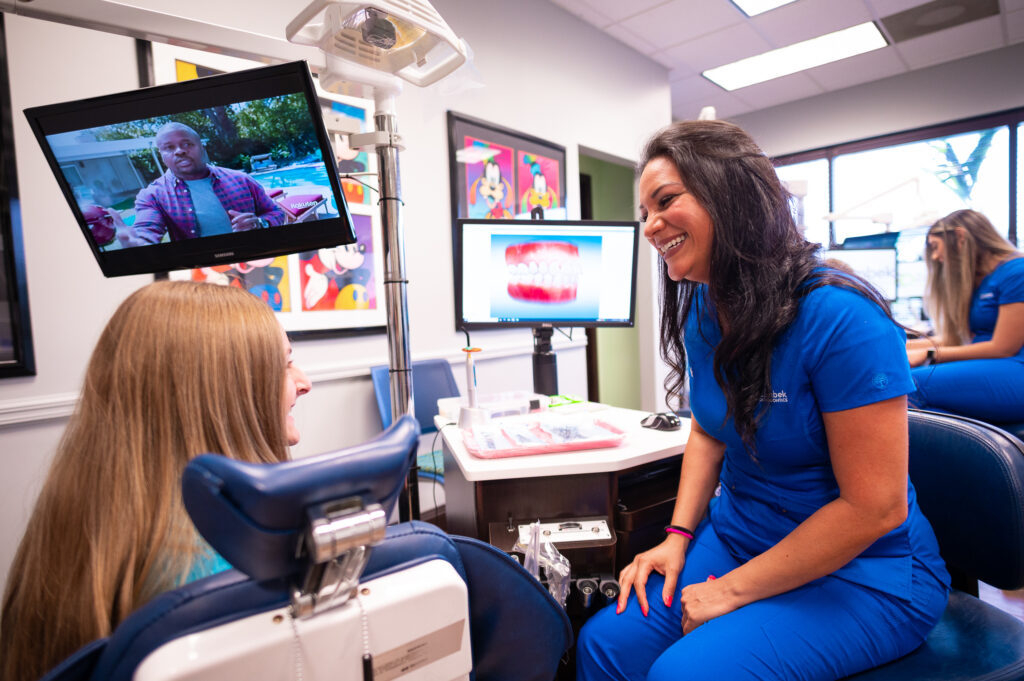
There are two phases of orthodontic treatment with braces or Invisalign. The first phase in the first 12 months produces the most obvious changes. Crowded teeth move apart, gapped teeth move together, impacted teeth move up or down to sit in line with the rest of the teeth. Basically, the teeth are lining up to move into their final positions.
The second phase is less obvious. This is when all of the teeth move into their proper dental arches. Overbites and underbites disappear. Crossbites in the back are resolved. Your teeth make their final journey into their proper places.
Consistency is vital in the second phase because this is when the teeth need to move into the correct position so we can remove your braces on time.
Braces patients need to wear their rubber bands as prescribed so that your jaws can be aligned properly. Invisalign patients need to wear their trays for that full 20-22 hours a day. When you wear aligners consistently and follow your prescribed plan, you give your teeth the best chance of finishing on schedule and with the best possible result.
You may not see the difference in this last phase, but you may start to feel the difference.
You may find it easier to bite and chew. You may bite your cheek or tongue less often. You may be breathing easier. Your jaw may be less fatigued after chewing, or you may have fewer headaches and neck aches because the causes of these issues are nearly resolved.
We'll do a checkup toward the end to review X-rays and see if your tooth roots are at the correct angle and healthy. We'll confirm that your teeth are where they should be. We'll probably stop the rubber band use if we haven't already.
We'll also set a debonding date, when the braces will come off. The good news is, debonding doesn't take as long as bonding. You'll probably only be in the chair for an hour or so as we remove your braces and clean off your teeth. Then, of course, we'll want to get some "after" photos to go along with the "before" shots we took the first day! THEN you'll be able to see the difference!
This will all happen in the last month or two of your treatment. That's when you know you're getting close!



Treatment times vary from patient to patient, and several factors are involved, including age, the severity of dental issues, and the number of issues being corrected. The average treatment time for braces is 12-24 months, while Invisalign patients usually wear their trays for 9-15 months. We will give you a set treatment time when we create your custom treatment plan.
Not wearing your appliances or Invisalign consistently can delay your treatment and extend your treatment time. It can also keep you from achieving the best possible results for your smile.
Treatment doesn't actually slow down. It just shifts from the most obvious movements, usually at the front of the mouth, to the less obvious ones, such as movement of the molars, alignment of the tooth roots, and bite alignment with the jaws. It's not as obvious, but it is just as important to your smile.
Not at all. We may just need to shift the way that tooth is moving to realign the tooth root. It's not a sign that something has gone wrong. Rather, it's a sign that your doctor is paying attention to detail and ensuring your teeth and jaws are healthy once treatment is complete.
Treatment with braces and Invisalign is a precise science that requires detailed, custom planning. Once your braces come off, retainers are what lock your results in place while the bone finishes setting. Zombek Orthodontics in Weston, FL, can provide the precision and expertise you need to get the smile you deserve.
Schedule an appointment with Zombek Orthodontics for Invisalign or braces treatment in Weston, FL, or Hollywood, FL.
Did you know that 50-60% of kids under 5 have a gap between their front teeth? In most cases, a gap between teeth will close on its own by age 8 or 9. If you are a parent or patient with gap teeth that do not close naturally, you may be wondering what causes this gap. Can it be fixed? Does it need to be fixed? At Zombek Orthodontics, we’re here to tell you that it is not medically necessary to correct gap teeth with braces in many cases. Many celebrities with gap teeth choose not to change their smiles – and regular people too! So if you love your beautiful gap teeth and there are no other problems present, great! As orthodontists, we can help you determine whether the gap between your front teeth is a cause for concern and, if so, what kind of treatment will be most helpful.
The technical term for a tooth gap is “diastema.” While it can happen anywhere in the mouth, most people think of the gap between the upper two front teeth when they use the phrase “gap teeth.” Gap teeth can result from several different causes. Some of the most common are:
While it’s not always necessary to “fix” gapped teeth, many patients do ask us how to close a gap in teeth. At Zombek Orthodontics, we offer several treatment options to close a gap between front teeth.
At Zombek Orthodontics, we provide self-ligating braces that don’t use elastics, so they’re more comfortable than traditional metal braces. We also recommend LightForce braces (a brand of clear braces) to our patients. LightForce braces are custom-designed based on the unique shape of your tooth, jawline, and facial structure, which creates the perfect fit throughout treatment. Traditional braces typically take 12-24 months, but LightForce braces are designed to provide maximum efficiency. So your treatment may take even less time.
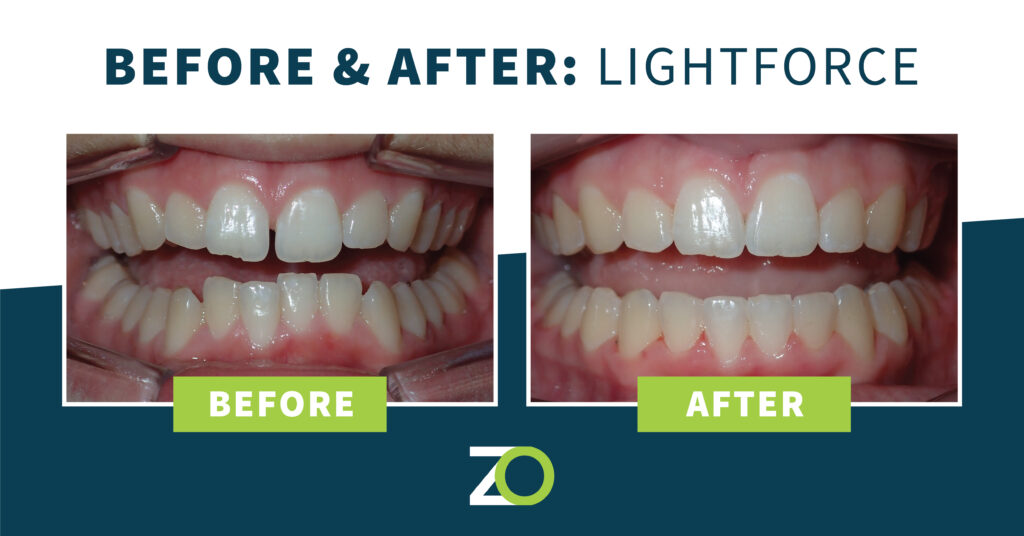
Invisalign clear aligners are another great way to close a gap in your teeth. Invisalign is a popular choice for gapped teeth and other dental issues, such as overbite, crossbite, or underbite. Invisalign treatment can happen in as little as six months, but an average case takes 9-15 months.
Are you wondering if you’re a good candidate for Invisalign? We can help you find out.
Other treatments are available for gap teeth, including veneers. Veneers are shells of material that fit over the front of your teeth to provide a more perfect smile. Because they tend to be slightly larger than your teeth, they can fix small gaps in teeth. But veneers aren’t for everyone, and they do have to be replaced after several years of use.
Dental bonding is sometimes used to fix gapped teeth and get a quick result compared to other methods. With dental bonding, your dentist applies a resin to your teeth to fill the gap and uses a special light to harden the resin. The downside of dental bonding is that it isn’t as stain-resistant as your natural teeth or crowns, so you must be careful what you eat and drink.
Dental implants might be a good solution if your gap teeth are the result of missing teeth. A dental implant can replace a missing tooth and keep your front teeth from getting a gap.
In a few cases, particularly those with an enlarged frenulum, dental surgery may be necessary to remove a gap between front teeth and keep the gap from returning. Patients may sometimes need a frenectomy to remove the excess frenulum.
While there are many potential causes for a gap between your teeth, these gaps (like other tooth alignment issues) are genetic in some cases. Gaps can certainly be hereditary. If both parents had a gap between their front teeth, there is a strong chance the child will have one too.
Beauty is in the eye of the beholder — and cultural norms can have a lot to do with what we see as beautiful. In some cultures, gapped teeth are actually preferred and seen as a sign of beauty. While it’s not necessarily the traditional standard in the United States, there are many celebrities who have embraced the gap between their teeth. If no other dental issues are present, gapped teeth may not need treatment. Absent other issues, it’s purely a cosmetic choice.
Do gap teeth close on their own?
Sometimes, yes. A gap between the front teeth is very common in young children and often closes naturally by age 8 or 9 as the permanent teeth come in. If the gap doesn't close on its own after the adult teeth are in, it's unlikely to resolve without treatment.
Is a gap in your teeth bad for your health?
Not always. A small gap between the front teeth, with no other dental issues, is generally a cosmetic concern, not a medical one. However, gaps caused by gum disease, missing teeth, or habits like thumb sucking can come with real dental health implications that are worth addressing.
Can Invisalign fix gap teeth?
Yes. Invisalign is one of the most common treatments for closing gaps between teeth. It works well for diastema, and treatment can take as little as six months for straightforward cases. An exam will tell us whether Invisalign is the right fit for the size and cause of your gap.
How long does it take to fix gap teeth with braces?
It depends on the size of the gap and whether other alignment issues need to be addressed at the same time. A small gap with no other concerns can sometimes be closed relatively quickly. More complex cases involving bite correction or multiple gaps may take 12 to 24 months. LightForce custom braces, which we offer at Zombek Orthodontics, are designed for efficiency and may shorten treatment time.
What is the fastest way to fix a gap between front teeth?
Dental bonding is typically the fastest option — it can often be completed in a single visit with your dentist. However, bonding is a cosmetic fix and doesn't address any underlying bite issues. For a more comprehensive and long-lasting result, braces or Invisalign are usually the better choice.
Gap teeth don't always need treatment, but when they do, there are more options than most people realize. At Zombek Orthodontics, we'll look at the full picture — the cause of the gap, your bite, and your goals — and give you an honest recommendation. If you're in the Weston or Hollywood, FL area and want to find out what's right for you or your child, schedule a consultation with Dr. Zombek.

 This site’s strategy, design, photo & video were created by the marginally-above-average folks @ Clear Partnering Group.